Upper Blepharoplasty in Turkey

Refresh the appearance of your upper eyelids with a personalised surgical approach that addresses excess skin and selected tissue while respecting your natural facial features.

Upper blepharoplasty procedure
UPPER BLEPHAROPLASTY

What Is Upper Blepharoplasty?

Upper blepharoplasty is a surgical procedure that reshapes the upper eyelid by addressing excess skin and selected fatty tissue.

Ageing can stretch the skin above the eyes and create a heavier or hooded appearance. In some people, excess upper eyelid skin can also affect the upper field of vision.

During surgery, your surgeon carefully assesses the eyelid, eyebrow, and surrounding facial structures before removing or repositioning tissue where appropriate. The goal is to create a refreshed appearance while preserving natural eyelid function and facial balance.

01
Focused on the Upper Eyelid

Treatment can address excess skin and selected tissue while respecting your natural eye shape.

CANDIDACY

Who Is a Good Candidate for Upper Blepharoplasty?

Upper blepharoplasty may suit adults who have excess upper eyelid skin, a hooded appearance, or functional concerns related to the upper eyelid.

01

Excess Upper Eyelid Skin

You have loose or stretched skin that creates a heavier or hooded appearance around the upper eyelid.

02

Hooded Upper Eyelids

Your upper eyelid skin may overlap the natural eyelid crease and make the eyes appear less open or defined.

03

Visual Field Concerns

Excess eyelid skin may interfere with part of your upper field of vision. Your surgeon can assess whether surgery may help.

04

Realistic Expectations

You understand that surgery can improve selected concerns but cannot stop the natural ageing process or guarantee a specific result.

05

Good General Health

You are healthy enough for the planned procedure and can follow your surgeon's preparation and recovery instructions.

06

Clear Treatment Goals

You have specific concerns about your upper eyelids and want an approach tailored to your facial anatomy and individual goals.

✓
Individual Assessment Matters

A consultation allows your surgeon to assess your eyelids, eyebrows, eye health, facial structure, and goals before deciding whether upper blepharoplasty is appropriate.

SURGICAL TECHNIQUES

Upper Blepharoplasty Techniques

Your surgeon selects the technique according to your eyelid anatomy, skin excess, tissue characteristics, and treatment goals.

01

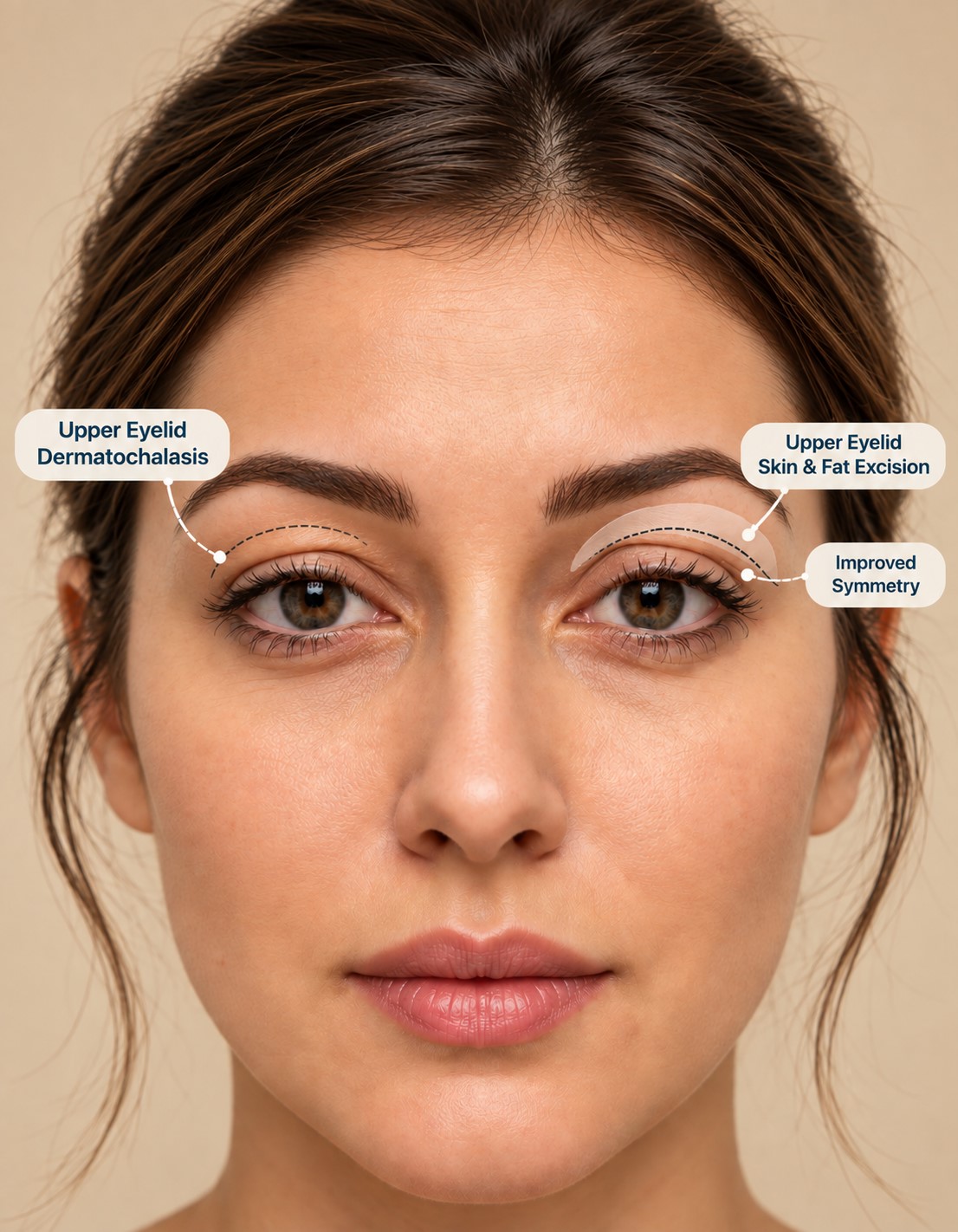
Skin-Only Resection

Your surgeon removes carefully measured excess upper eyelid skin while preserving an appropriate amount of tissue for comfortable eyelid closure.
02

Skin & Muscle Treatment

When appropriate, your surgeon may address selected portions of the orbicularis muscle along with excess skin to refine the upper eyelid contour.

03

Fat Removal

If prominent upper eyelid fat contributes to fullness, your surgeon may remove a carefully selected amount to create a more balanced contour.

04

Fat Repositioning

In selected cases, your surgeon may reposition existing fat rather than removing it to maintain soft tissue volume and improve contour.

05

Volume-Preserving Approach

A tissue-preserving approach can help maintain appropriate eyelid volume while addressing excess skin and other selected changes.

06

Combined Eyelid Approach

Your surgeon may combine different techniques when several upper eyelid concerns require treatment during the same procedure.

PERSONALIZED APPROACH

Upper blepharoplasty does not follow one technique for every patient. Your surgeon will determine which tissues to treat after examining your eyelids, eyebrows, facial structure, and individual goals.

POTENTIAL BENEFITS

Benefits of Upper Blepharoplasty

Upper blepharoplasty can address selected changes in the upper eyelids and create a more refreshed, balanced appearance.

01

Refreshed Eye Appearance

Removing carefully selected excess tissue can create a more open and refreshed appearance around the eyes.

02

Reduced Hooding

Treatment can reduce excess upper eyelid skin that overlaps the natural eyelid crease and creates a hooded appearance.

03

Improved Eyelid Contour

Your surgeon can refine the upper eyelid contour by addressing selected skin, muscle, or fat according to your anatomy.

04

Better Facial Balance

A carefully planned procedure can improve the relationship between the upper eyelids, eyebrows, and surrounding facial features.

05

Potential Visual Field Improvement

When excess upper eyelid skin limits the upper field of vision, removing the obstruction may improve the affected visual field.

06

Natural-Looking Results

A personalised approach focuses on preserving appropriate eyelid volume, function, and your natural facial character.

INDIVIDUAL RESULTS VARY

The benefits you may experience depend on your eyelid anatomy, the amount of excess tissue, your functional concerns, and the surgical approach your surgeon recommends.

THE SURGICAL PROCESS

What Happens During Upper Blepharoplasty?

Your surgeon plans each step around your eyelid anatomy, facial features, and the changes you want to address.

01

Consultation & Surgical Planning

Your surgeon examines your upper eyelids, eyebrows, facial structure, and any functional concerns. They then determine which tissues require treatment and discuss your goals.

02

Anaesthesia

The surgical team prepares you for the planned anaesthesia. Your surgeon will explain the appropriate anaesthesia approach during your consultation.

03

Incision Placement

Your surgeon places the incision within the natural crease of the upper eyelid where possible. This position helps keep the resulting scar discreet once it heals.

04

Removing or Repositioning Tissue

Your surgeon removes carefully selected excess skin and may address muscle or fat when appropriate. In some cases, they reposition fat instead of removing it.

05

Refining the Eyelid Contour

Your surgeon checks the eyelid contour and tissue balance before completing the procedure. The approach focuses on maintaining appropriate eyelid function and natural facial proportions.

06

Closing the Incision

Your surgeon closes the incision with fine sutures or another appropriate closure method. The team then moves you into the recovery phase and provides postoperative instructions.

PROCEDURE TIME
Approximately 30 minutes to 2 hours

The duration depends on the surgical plan, the tissues treated, and whether your surgeon combines upper blepharoplasty with another procedure.

RECOVERY & RESULTS

Recovery & Expected Results

Recovery after upper blepharoplasty usually involves temporary swelling, bruising, and mild discomfort. Your appearance gradually settles as the eyelids heal.

01

First Few Days

Swelling and bruising are common during the early recovery period. You may also experience mild discomfort, dryness, or temporary blurred vision.

02

First Week

Swelling and bruising usually begin to improve. Your surgeon will provide instructions about incision care, activity, and any follow-up appointments.

03

Following Weeks

The eyelids continue to settle as residual swelling decreases. Many patients gradually return to normal activities according to their surgeon's guidance.

04

Long-Term Healing

The incision and eyelid contours continue to mature over time. Final results become clearer as the remaining swelling resolves.

EXPECTED RESULTS

A More Refreshed & Balanced Appearance

Upper blepharoplasty can reduce selected excess skin and tissue while maintaining the natural character of your eyes.

  • Less prominent upper eyelid hooding
  • A more defined upper eyelid contour
  • A refreshed appearance around the eyes
  • Improved facial balance
  • Potential improvement in visual field when excess skin causes obstruction
Patience Matters

Early swelling can affect the appearance of the eyelids. Your surgeon will assess your progress during follow-up as healing continues.

RECOVERY VARIES

Healing time and final results vary between patients. Your surgeon will provide personalised instructions based on your procedure and individual recovery.

BEFORE & AFTER

Upper Blepharoplasty Before & After

Before-and-after photographs can help you understand the type of changes upper blepharoplasty may achieve. Each result depends on your eyelid anatomy, tissue characteristics, healing, and individual treatment plan.
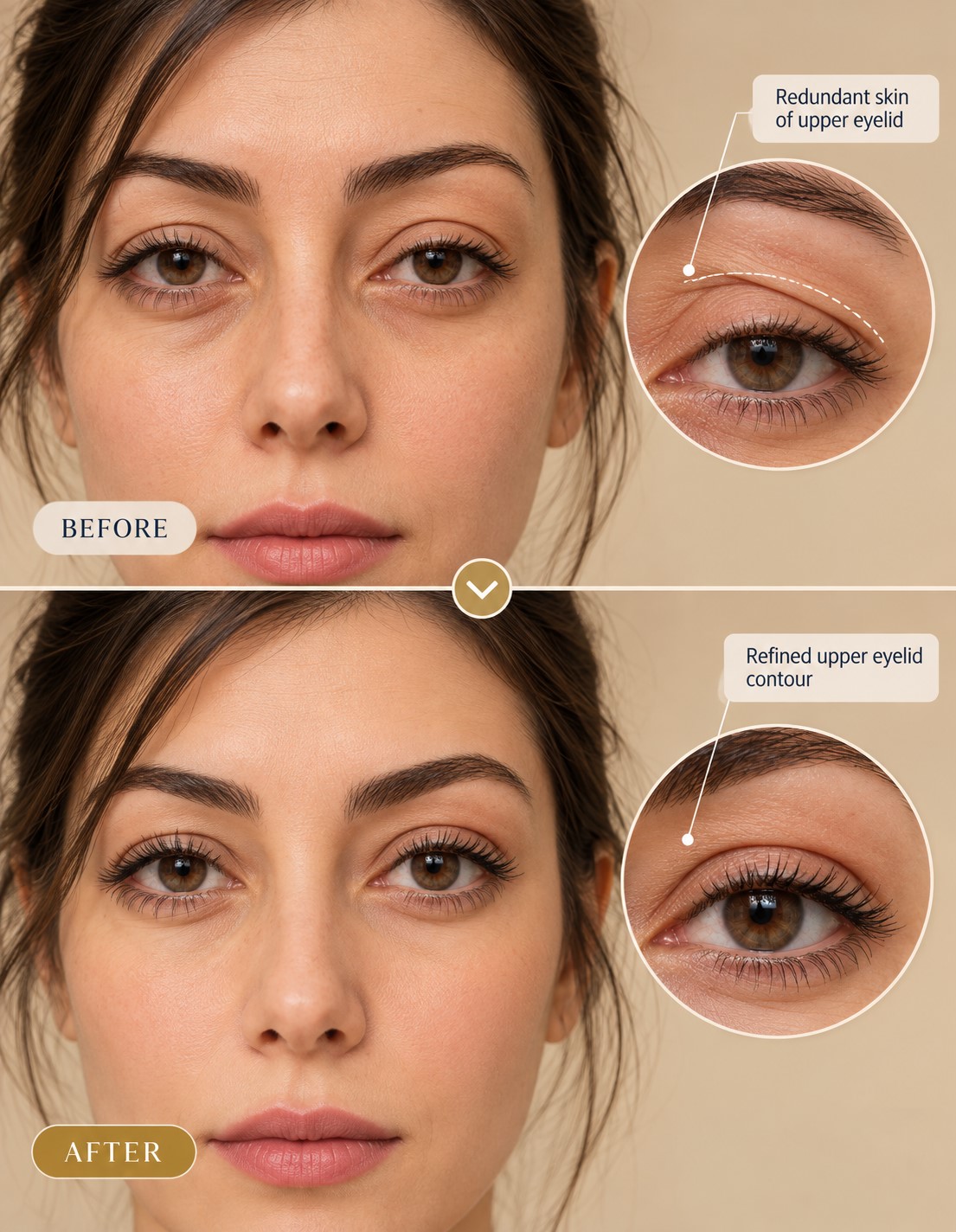
Upper blepharoplasty before and after comparison
INDIVIDUAL RESULTS VARY

A More Refreshed & Defined Upper Eyelid

Upper blepharoplasty can reduce selected excess skin and tissue while maintaining the natural shape and function of the eyelid.

Your surgeon will assess your eyelid anatomy, surrounding facial structures, and treatment goals before recommending the most appropriate approach.

01
Assess

Examine the eyelids, eyebrows, facial structure, and individual concerns.

02
Plan

Select the surgical approach according to your anatomy and goals.

03
Refine

Address selected excess tissue while preserving natural eyelid balance.

PLEASE NOTE

Before-and-after images represent individual patient outcomes and do not guarantee a specific result. Healing and final appearance vary from person to person.

FREQUENTLY ASKED QUESTIONS

Upper Blepharoplasty FAQs

Find answers to common questions about upper blepharoplasty, including candidacy, techniques, recovery, results, and potential risks.

What is upper blepharoplasty? +

Upper blepharoplasty is surgery that addresses excess skin and selected tissue in the upper eyelid. It can improve a hooded appearance and, in some cases, help when excess skin affects the upper visual field.

Who is a good candidate for upper blepharoplasty? +

Adults with excess upper eyelid skin, hooding, or selected functional concerns may be suitable. A consultation helps determine whether surgery fits your anatomy, health, and treatment goals.

Can upper blepharoplasty improve vision? +

If excess upper eyelid skin obstructs part of the upper visual field, removing the obstruction may improve that affected field. Your surgeon will assess your individual symptoms before recommending surgery.

What techniques can surgeons use for upper blepharoplasty? +

Techniques may include skin removal, selected muscle treatment, fat removal, or fat repositioning. Your surgeon chooses the approach based on your eyelid anatomy and goals.

Where is the upper blepharoplasty incision placed? +

Surgeons commonly place the incision within the natural crease of the upper eyelid. This location can help make the scar less noticeable as it heals.

How long does upper blepharoplasty take? +

The procedure can take approximately 30 minutes to 2 hours, depending on the surgical plan, tissues treated, and whether your surgeon combines it with another procedure.

What is recovery like after upper blepharoplasty? +

Swelling and bruising commonly occur during the early recovery period. These effects gradually improve, while the eyelids continue to settle over the following weeks and months.

When will I see the final results? +

You may notice changes as early swelling decreases, but the eyelids continue to heal over time. Your surgeon will assess your progress as the tissues settle and scars mature.

Can upper blepharoplasty leave a visible scar? +

The incision usually sits within the natural upper eyelid crease, which can make the scar less noticeable after healing. Scar appearance varies between patients.

What are the risks of upper blepharoplasty? +

Potential risks include bruising, swelling, dry eyes, temporary blurred or double vision, difficulty closing the eyes, bleeding, and other complications. Your surgeon will discuss your individual risks before surgery.

Can upper blepharoplasty be combined with other procedures? +

Surgeons may combine upper blepharoplasty with procedures such as a brow lift or facelift when appropriate. Your treatment plan depends on your anatomy, concerns, and overall goals.

Will upper blepharoplasty stop the ageing process? +

No. Upper blepharoplasty can address existing excess skin and selected tissue changes, but it cannot prevent future ageing. Your eyelids will continue to change naturally over time.

PERSONALISED GUIDANCE

Have More Questions About Upper Blepharoplasty?

Discuss your eyelid concerns, treatment options, and expected recovery with our surgical team.

Book Your Consultation →
CONTACT US

Start Your Treatment Journey

Contact our team to discuss your goals, receive your personalized treatment plan, and begin your journey to Istanbul with confidence.

WhatsApp +90 532 643 54 46
Email serdarduzgun@gmail.com
Location Cemil Topuzlu Caddesi, Suzan Apartmanı No: 75/9, Kadıköy, Istanbul, Türkiye
Response Time Within 6 Hours

Book Consultation