Unsatisfactory Appearance
You may remain unhappy with the shape, size, symmetry, or overall appearance of your nose after previous surgery.
A personalised approach to correcting changes after previous nose surgery, with careful attention to nasal structure, breathing, facial balance, and your individual goals.
Revision rhinoplasty is a secondary nose surgery for patients who have already undergone rhinoplasty or another nasal procedure.
The procedure can address concerns that remain after previous surgery, including changes in nasal shape, asymmetry, structural weakness, or ongoing breathing difficulties.
Previous surgery can change the nasal framework and create scar tissue. These changes often make revision surgery more complex than primary rhinoplasty. Your surgeon must carefully assess the existing structure before planning the next step.
Revision planning considers both nasal appearance and breathing, with the goal of creating a stable and balanced result.
Previous nose surgery does not always resolve every concern. Revision rhinoplasty can address persistent aesthetic or functional issues and help restore nasal balance and support.
You may remain unhappy with the shape, size, symmetry, or overall appearance of your nose after previous surgery.
Changes after surgery can affect nasal airflow. Revision surgery may address structural problems that contribute to ongoing breathing concerns.
The nose may develop asymmetry, contour irregularities, or weakened support as the tissues heal after an earlier procedure.
An injury after rhinoplasty can alter the nasal framework and affect both appearance and function.
Some concerns from the first procedure may remain unresolved or may require a different surgical approach.
Healing, ageing, or gradual changes in nasal tissues can alter the result of an earlier rhinoplasty.
Revision rhinoplasty requires careful assessment because previous surgery can change the nasal framework, available cartilage, and surrounding scar tissue.
Both procedures can reshape the nose, but revision rhinoplasty starts with a nasal structure that previous surgery has already changed.
The surgeon works with the nose before any previous rhinoplasty has altered its structure.
The surgeon works with a nose that has already undergone surgery and may have scar tissue or structural changes.
The surgeon plans the procedure around the patient's natural nasal framework, anatomy, and goals.
The surgeon must first assess previous changes before deciding how to reshape or support the nose.
The surgeon generally has the patient's original nasal cartilage available for structural work.
Previous surgery may have reduced the available septal cartilage, so additional grafting may sometimes become necessary.
The surgeon reshapes the existing nasal framework to achieve the planned aesthetic and functional goals.
The surgeon may need to correct previous changes while rebuilding support, improving symmetry, and addressing functional concerns.
Previous surgery can make revision rhinoplasty more technically demanding. Your surgeon needs a detailed understanding of the current nasal framework before creating a new surgical plan.
Revision rhinoplasty may suit people who remain concerned about their nasal appearance, breathing, or structural changes after previous surgery.
You understand that revision surgery aims to improve specific concerns rather than guarantee a perfect result.
You remain unhappy with aspects of your nasal shape, symmetry, proportions, or overall appearance after previous surgery.
You experience persistent nasal obstruction or other breathing difficulties that may relate to structural changes.
Enough time has passed since your previous surgery for swelling and healing changes to settle before another operation.
You have suitable general health for surgery and can follow the recommended preparation and recovery plan.
You can clearly discuss what concerns you want to improve and understand the limits of revision surgery.
Revision rhinoplasty requires a tailored surgical plan. Your surgeon selects techniques according to the existing nasal framework, previous changes, scar tissue, breathing concerns, and your treatment goals.
Cartilage grafts can reinforce areas that need additional support. Depending on the available cartilage and surgical needs, the surgeon may use cartilage from the septum, ear, or rib.
Spreader grafts can help support the middle portion of the nose and improve the internal nasal valve area when structural changes have affected nasal airflow.
Grafts can provide additional support to the nasal tip and columella. The surgeon may use them to improve projection, definition, stability, or contour.
Alar rim grafts can help support the nostril margins when previous surgery has caused contour changes, weakness, or nostril retraction.
Carefully placed graft material can smooth selected contour irregularities and create a more even nasal surface when previous surgery has left visible depressions or uneven areas.
When previous surgery has weakened or altered the septum, reconstruction may help restore structural support and address selected functional concerns.
Not every technique suits every patient. Your surgeon chooses the appropriate approach after examining the nasal framework, skin, scar tissue, available cartilage, and functional concerns.
A carefully planned revision procedure can address concerns from previous nasal surgery while supporting a more balanced appearance and better function.
Revision surgery can address selected shape and proportion concerns to create a more harmonious relationship between the nose and face.
The procedure can target visible asymmetry, contour irregularities, or structural changes that developed after an earlier operation.
When structural changes affect nasal airflow, revision surgery may help address selected breathing concerns.
Structural techniques and grafting can reinforce areas that have lost support after previous surgery.
Your surgeon can address selected irregularities, depressions, or contour changes that remain after the first procedure.
A tailored surgical plan can improve the relationship between nasal structure, facial proportions, and your individual features.
Revision rhinoplasty cannot guarantee a specific outcome. Your previous surgery, nasal anatomy, tissue quality, and available cartilage all influence what the procedure can achieve.
Revision rhinoplasty starts with a detailed assessment of the nose and previous surgical changes. Your surgeon then follows a tailored plan to address structural, functional, and aesthetic concerns.
Your surgeon reviews your previous surgery, examines your current nasal structure, and discusses your aesthetic and functional concerns. This assessment guides the revision plan.
Revision rhinoplasty commonly takes place under general anaesthesia. Your surgical team monitors you throughout the procedure to maintain your safety and comfort.
Your surgeon may use an open or closed approach depending on the complexity of the revision and the areas that need correction.
Your surgeon carefully modifies the existing cartilage and bone while preserving or restoring support. Grafts may provide additional structure when the existing framework needs reinforcement.
When appropriate, the surgeon addresses structural factors that affect nasal airflow while refining the shape and proportions of the nose.
The surgeon closes the incisions and places appropriate support or external protection. Your care team then provides instructions for the early recovery period.
The exact surgical steps vary according to your previous operation, nasal anatomy, available cartilage, scar tissue, and treatment goals.
Revision rhinoplasty often needs more healing time than primary rhinoplasty. Swelling gradually settles as the tissues heal and the nose continues to refine over the months after surgery.
Swelling, bruising, tenderness, and nasal congestion can occur during the early recovery period. Your surgeon will provide specific instructions for protecting the nose.
Many patients can gradually return to work and routine activities within the first couple of weeks, depending on the extent of surgery and individual healing.
Your surgeon may limit strenuous exercise and activities that could place pressure or impact on the nose while the tissues continue to heal.
The nose gradually becomes more refined as swelling decreases. Revision surgery can take longer to settle because previous surgery may have created additional scar tissue.
Subtle swelling can persist for many months, and the final appearance may continue to develop as the tissues mature. Your surgeon will assess your progress during follow-up appointments.
Avoid judging the final result during the early healing period. Swelling can temporarily affect nasal shape, and revision rhinoplasty may require a longer period for the tissues to settle.
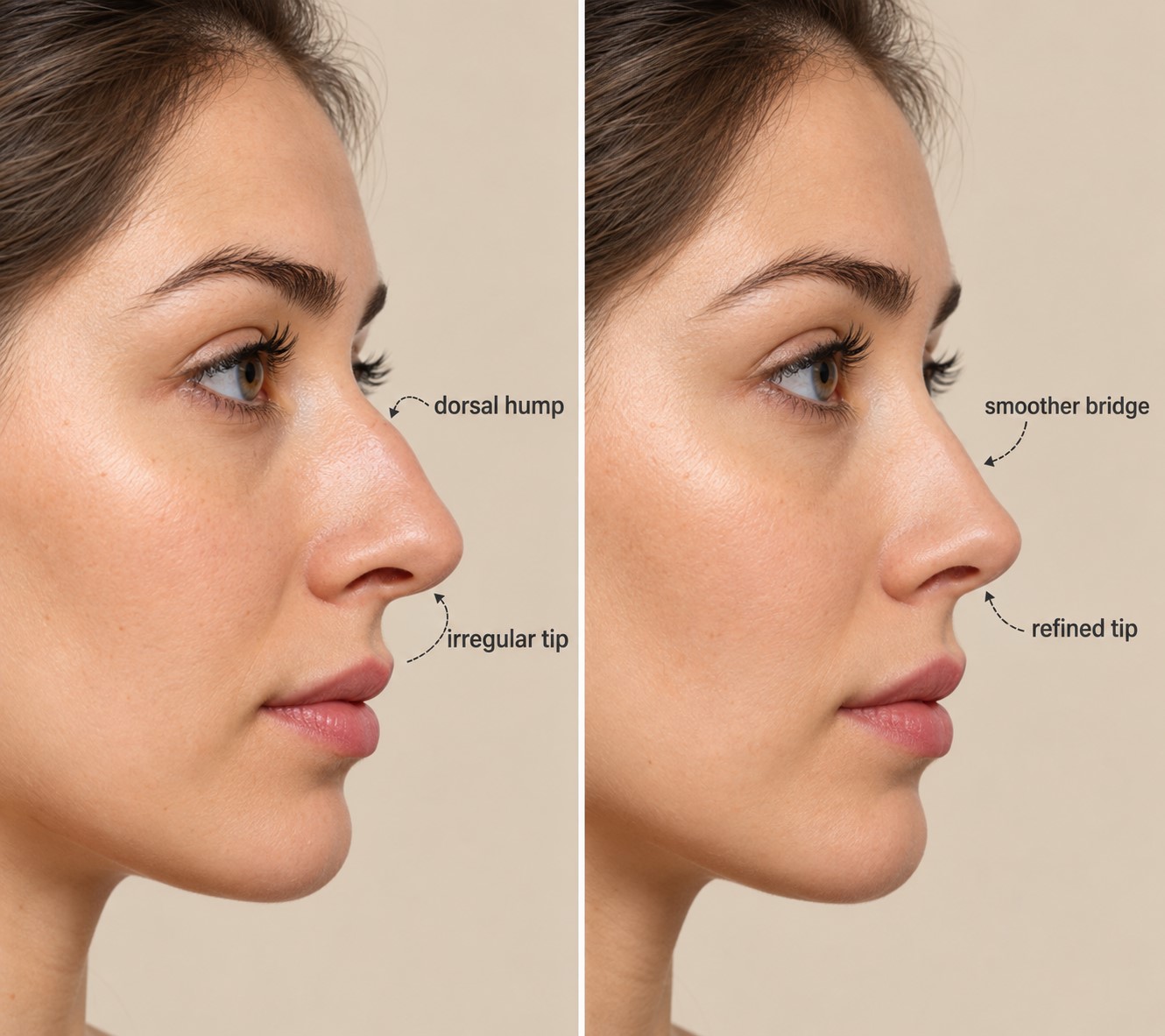
Before-and-after photographs can help you understand the type of changes revision rhinoplasty may achieve. Each result depends on the previous surgery, nasal structure, tissue quality, healing, and individual goals.
Revision rhinoplasty can address selected contour concerns, improve nasal balance, and restore structural support when appropriate.
Your surgeon will assess your previous surgery, current anatomy, breathing, and treatment goals before recommending an approach.
Review the existing nasal structure and previous surgical changes.
Develop a surgical plan around your anatomy and individual goals.
Focus on proportion, structure, function, and natural-looking improvement.
Before-and-after images represent individual patient outcomes and do not guarantee a specific result. Healing and final appearance vary from person to person.
Find answers to common questions about revision rhinoplasty, including timing, recovery, techniques, and expected results.
The surgical time varies according to the complexity of the revision. Procedures that require structural reconstruction or cartilage grafting may take longer than more limited revisions.
Many surgeons recommend waiting about one year after the previous rhinoplasty. This allows swelling to settle and scar tissue to mature before the next procedure.
Revision rhinoplasty can present greater technical challenges because previous surgery may alter cartilage, bone, scar tissue, and nasal support. Your surgeon must plan around the changes from the earlier procedure.
Revision rhinoplasty may improve breathing when structural problems contribute to nasal obstruction. Your surgeon can assess the internal nasal structures and discuss appropriate functional techniques.
Some patients need cartilage grafts to restore support or refine the nasal structure. Depending on the available cartilage, the surgeon may use tissue from the septum, ear, or another suitable donor site.
An open revision rhinoplasty leaves a small incision across the columella. Surgeons place and close this incision carefully, and the scar usually becomes less noticeable as it heals.
Many patients gradually return to work and routine activities within the first couple of weeks. Swelling can continue to decrease for several months, and revision cases may need longer for the tissues to settle.
The nose changes gradually during recovery. Minor swelling can persist for many months, so the final appearance may take a year or longer to fully settle in some revision cases.
Revision surgery cannot always restore the nose to its exact pre-surgery appearance. Previous procedures can create permanent structural changes, so treatment focuses on achievable improvements based on your current anatomy.
Revision rhinoplasty can address some forms of nasal asymmetry by reshaping cartilage, adjusting structural support, or using grafts when appropriate. The extent of improvement depends on the underlying anatomy.
Revision rhinoplasty commonly uses general anaesthesia, particularly when the procedure requires extensive structural correction or grafting. Your surgical team will discuss the appropriate anaesthesia plan during your consultation.
A consultation can help determine whether your nose has healed sufficiently and whether your goals match what surgery can realistically achieve. Your surgeon will review your previous operation, current anatomy, breathing, and expectations.
Discuss your previous surgery, current concerns, and goals with our team to explore the most appropriate treatment approach.
Book Your Consultation →Contact our team to discuss your goals, receive your personalized treatment plan, and begin your journey to Istanbul with confidence.