Refine the lower abdomen with a personalised surgical approach that removes selected excess skin and addresses mild muscle laxity while preserving your natural proportions.
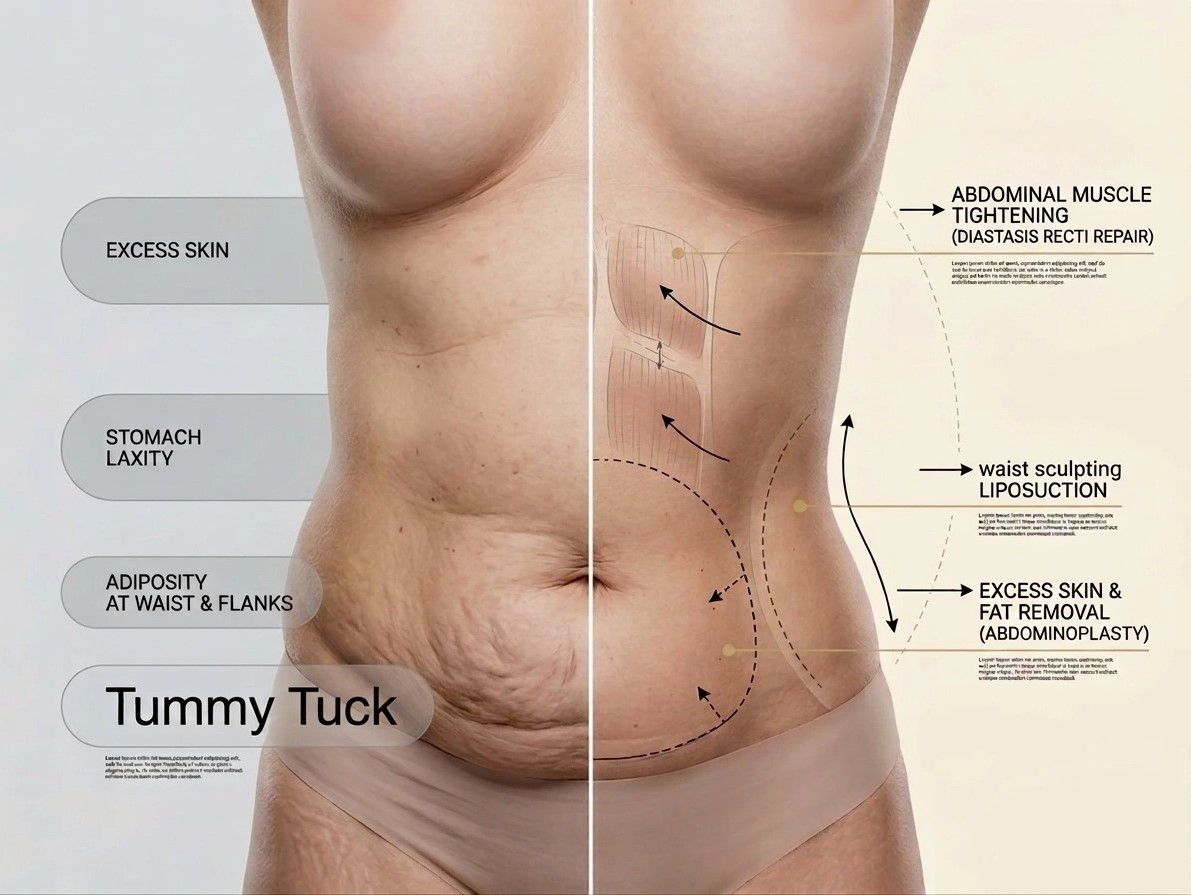
A mini tummy tuck is a focused abdominal contouring procedure that targets excess skin and selected laxity in the lower abdomen, particularly below the belly button.
Your surgeon removes a controlled amount of excess lower-abdominal skin through a low incision and may tighten the underlying tissues when appropriate. Unlike a full tummy tuck, the procedure does not normally require repositioning the belly button.
This focused approach can suit patients whose concerns remain mainly below the navel. Your surgeon will assess your skin, abdominal wall, body proportions, and goals before recommending the most suitable approach.
Both procedures improve abdominal contours, but they address different areas and degrees of skin and muscle laxity. Your surgeon selects the approach that best matches your anatomy and treatment goals.
A mini tummy tuck can suit people with localised lower-abdominal concerns that do not require a full abdominal procedure. Your surgeon evaluates your anatomy, health, skin quality, and goals before recommending the right approach.
You have loose or excess skin mainly below the belly button and want to improve the contour of this area.
You have selected lower-abdominal muscle laxity that may benefit from targeted tightening during surgery.
You maintain a relatively stable weight and do not expect major weight changes after your procedure.
Your lower-abdominal skin has enough quality and elasticity for the surgeon to achieve a suitable contour.
You follow a generally healthy lifestyle and can support your body through the surgical recovery process.
You understand that a mini tummy tuck focuses on the lower abdomen and may not address concerns across the entire abdomen.
A mini tummy tuck offers a focused way to improve selected lower-abdominal concerns. The benefits depend on your anatomy, skin quality, and individual treatment plan.
Removing selected excess skin can create a smoother and more defined appearance across the lower abdomen.
The procedure removes loose lower-abdominal skin and creates a firmer-looking contour.
When appropriate, your surgeon can address selected lower-abdominal muscle laxity during the procedure.
The procedure concentrates on the lower abdomen when your concerns do not require comprehensive abdominal surgery.
A mini tummy tuck generally allows the belly button to remain in its natural position.
The incision sits low along the lower abdomen, allowing the scar to remain beneath most underwear and swimwear.
Your surgeon plans the procedure around your lower-abdominal anatomy, skin quality, and individual goals. The surgery focuses on selected areas while keeping the treatment more contained than a full tummy tuck.
Your surgeon assesses your lower abdomen, skin laxity, abdominal wall, body proportions, and treatment goals. This assessment helps determine whether a mini tummy tuck suits your needs.
Your surgical team prepares you for the procedure and selects the appropriate anaesthesia based on the planned surgery, your health, and your surgeon's recommendation.
Your surgeon makes a horizontal incision low on the abdomen, usually near the bikini line. The position helps keep the resulting scar discreet beneath most underwear and swimwear.
Your surgeon removes selected excess skin from the lower abdomen and carefully adjusts the remaining tissue to create a smoother contour.
If your examination shows suitable muscle laxity, your surgeon may tighten the lower abdominal fascia to improve firmness and contour.
Your surgeon closes the incision carefully and applies appropriate dressings. Your care team then gives you personalised instructions for early recovery and follow-up.
Recovery after a mini tummy tuck varies with the extent of treatment and your individual healing process. Most patients gradually return to normal activities as swelling settles and the tissues recover.
Swelling, bruising, tightness, and discomfort can occur during the early recovery period. Gentle movement can support mobility, while strenuous activity should wait until your surgeon allows it.
Many patients can gradually resume light daily activities and desk-based work when they feel comfortable. Your surgeon will guide your activity level according to your healing progress.
Swelling continues to decrease as the lower abdomen settles. You can gradually increase activity while following your surgeon's instructions and avoiding movements that strain the healing area.
The abdominal contour becomes clearer as most swelling resolves. Your scar also begins to mature and gradually become less noticeable over time.
A mini tummy tuck can improve the appearance of the lower abdomen by removing selected excess skin and addressing suitable muscle laxity.
Before-and-after images can help you understand how mini tummy tuck surgery may refine the lower abdomen. Each result reflects the patient's anatomy, skin quality, treatment plan, and healing process.
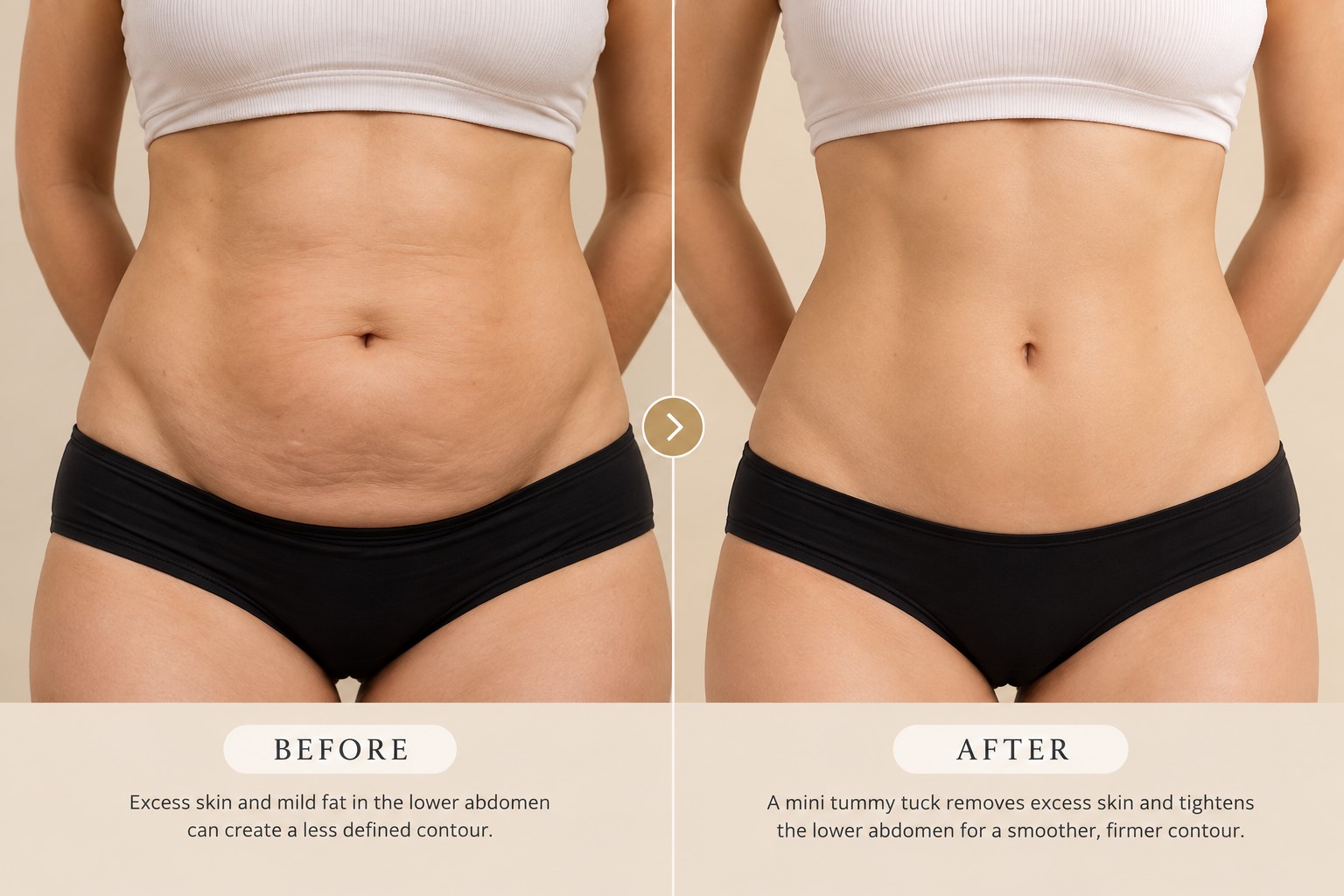
Mini tummy tuck surgery focuses on selected concerns in the lower abdomen. The procedure can refine excess skin and improve abdominal contour when your anatomy suits a focused approach.
Review the lower abdominal skin, tissue quality, and abdominal wall.
Address selected excess skin and abdominal laxity through a focused surgical approach.
Aim for a smoother lower abdomen that complements your natural proportions.
Find clear answers to common questions about mini tummy tuck surgery, candidacy, recovery, results, and treatment planning.
A mini tummy tuck focuses on excess skin and selected laxity in the lower abdomen. It uses a lower abdominal incision and usually does not require belly button repositioning.
Good candidates usually have excess lower-abdominal skin, mild abdominal laxity, stable weight, suitable skin quality, and realistic expectations. A consultation helps determine whether a mini or full tummy tuck better suits your anatomy.
A mini tummy tuck mainly addresses the lower abdomen, while a full tummy tuck can treat excess skin and muscle laxity across a larger area. A full procedure may also involve repositioning the belly button.
A surgeon may tighten selected areas of the abdominal wall when appropriate. The extent of muscle correction depends on your anatomy, abdominal laxity, and surgical plan.
Yes. A mini tummy tuck can remove selected excess skin from the lower abdomen. Your surgeon determines how much skin can be removed safely during your assessment.
A mini tummy tuck typically does not require belly button repositioning. Your surgeon will assess your abdominal proportions and surgical needs before recommending the procedure.
Many patients gradually return to normal daily activities over the first few weeks. Recovery varies according to the surgical approach, healing response, activity level, and individual circumstances.
Light movement usually forms part of early recovery, while strenuous exercise requires more time. Your surgeon should guide your return to exercise based on your healing progress.
Yes. A mini tummy tuck creates a scar along the lower abdomen. Careful incision planning can help keep the scar discreet, but scar appearance varies between patients.
The removed skin does not grow back, but ageing, pregnancy, and significant weight changes can alter the abdominal contour over time. Maintaining a stable weight can help preserve the result.
A mini tummy tuck may remove some stretch-marked skin when those marks lie within the area selected for skin removal. It does not remove all stretch marks.
Some patients may benefit from combining a mini tummy tuck with liposuction. Your surgeon will assess your anatomy, goals, and overall safety before recommending combined procedures.
No. A mini tummy tuck focuses on contouring rather than weight loss. It works best for patients who already maintain a relatively stable weight but have specific lower-abdominal concerns.
The decision depends on the location and amount of excess skin, abdominal muscle laxity, skin quality, and your desired outcome. A personalised consultation can determine which approach fits you best.
Your surgeon will provide personalised preparation instructions. These may include maintaining a stable weight, reviewing medications and supplements, avoiding smoking, and arranging appropriate support during your recovery.
Every abdomen has different anatomy, skin quality, and treatment needs. A consultation can help determine the most appropriate surgical approach for your goals.
Contact our team to discuss your goals, receive your personalized treatment plan, and begin your journey to Istanbul with confidence.