Ablative Laser Resurfacing
Ablative lasers remove controlled layers of the outer skin to address concerns such as wrinkles, uneven texture, and certain scars. They can create more noticeable skin resurfacing but usually require more recovery time.
Refresh your skin with a personalised laser treatment designed to improve texture, tone, and overall skin appearance while supporting your natural features.
Laser skin resurfacing uses focused laser energy to improve the appearance and texture of the skin. Depending on the treatment, the laser can remove selected outer skin layers or heat deeper tissue to encourage collagen production.
A personalised treatment can target concerns such as fine lines, uneven skin tone, acne scars, sun damage, and rough skin texture. Your practitioner selects the laser type and treatment depth according to your skin, concerns, and desired results.
The treatment focuses on refining skin texture and tone while supporting smoother, firmer, and more even-looking skin.
Laser skin resurfacing may suit adults who want to improve specific skin concerns such as uneven texture, fine lines, pigmentation, or certain scars. A consultation helps determine whether the treatment matches your skin, medical history, concerns, and desired results.
People with rough or uneven skin texture may benefit from treatment that encourages smoother-looking skin.
Laser resurfacing can address selected fine lines and early signs of skin ageing.
Certain laser treatments can improve the appearance of sun-related changes in skin tone and texture.
Selected resurfacing techniques can help reduce the appearance of certain acne scars.
Good candidates understand that laser resurfacing improves targeted concerns rather than creating perfect skin.
Your practitioner should review your skin, health, medications, and previous treatments before recommending laser resurfacing.
Laser selection and treatment depth depend on your skin, concerns, medical history, and desired outcome. Your practitioner can also consider factors such as recent medications, a history of cold sores, smoking, and your risk of pigmentation changes before recommending treatment.
Laser resurfacing includes different treatment approaches that target the skin at different depths. Your practitioner selects the most appropriate option according to your skin concerns, treatment goals, and desired recovery time.
Ablative lasers remove controlled layers of the outer skin to address concerns such as wrinkles, uneven texture, and certain scars. They can create more noticeable skin resurfacing but usually require more recovery time.
Non-ablative lasers heat targeted skin tissue without removing the outer skin layer. They can support collagen production and improve selected concerns with generally less downtime.
Fractional lasers treat microscopic columns of skin while leaving surrounding areas intact. This approach can improve texture and selected scars while supporting the skin's natural healing response.
CO₂ lasers can provide deeper resurfacing for selected concerns such as pronounced wrinkles, sun damage, and certain scars. The treatment usually involves a longer recovery period than gentler options.
Erbium lasers can resurface the skin with a more controlled treatment depth. Practitioners may use them for fine lines, pigmentation, and uneven skin texture.
Depending on the concern, practitioners may also consider technologies such as pulsed-dye lasers, Nd:YAG lasers, or IPL. Each technology targets different skin concerns and requires individual assessment.
No single laser suits every patient or every skin concern. Your practitioner considers your skin type, pigmentation risk, medical history, treatment goals, and expected downtime when choosing the appropriate technology and treatment depth.
Laser skin resurfacing follows a personalised treatment plan based on your skin concerns, treatment area, laser technology, and desired outcome. The process includes skin preparation, controlled laser treatment, and tailored aftercare.
Your practitioner examines your skin, discusses your concerns and goals, and reviews your medical history. They then select the appropriate laser approach and treatment depth for your needs.
The treatment area is cleaned before the procedure. Depending on the laser and treatment depth, your practitioner may use a topical or local anaesthetic to improve comfort.
Your practitioner directs controlled laser energy across the selected treatment areas. The laser removes or heats targeted skin according to the treatment plan.
The practitioner adjusts the treatment according to the selected technology and depth. This approach can target concerns such as uneven texture, fine lines, pigmentation, and certain scars.
After treatment, your practitioner may apply appropriate cooling or protective skin care. They will also explain how to care for the treated area during the healing period.
You receive personalised aftercare instructions for protecting and caring for your skin. Your practitioner may also schedule follow-up care to assess healing and the development of your results.
Treatment time, anaesthesia, laser settings, and recovery depend on the technology, treatment area, skin condition, and depth of resurfacing selected for you.
Recovery after laser skin resurfacing depends on the laser technology, treatment depth, and area treated. Your skin may look red or feel sensitive at first, while the final improvement develops as the skin heals and remodels.
Treated skin may appear red, swollen, or sensitive. You may also notice warmth, itching, or a stinging sensation depending on the treatment depth.
Your skin begins to heal during this stage. Some treatments can cause peeling or crusting, so follow your practitioner's skin-care instructions and protect the treated area from sun exposure.
Recovery time varies with treatment intensity. More intensive resurfacing may require several weeks for the skin to heal, while gentler treatments often allow a quicker return to normal activities.
As healing continues, the skin can develop a smoother texture and more even appearance. Collagen remodeling may continue to improve the result over time.
Laser skin resurfacing can improve selected concerns while supporting a more even and refreshed appearance. Results vary according to the treatment approach, skin condition, and individual healing response.
Your skin needs time to heal after resurfacing. Follow your aftercare instructions carefully and protect your skin from sunlight while it recovers.
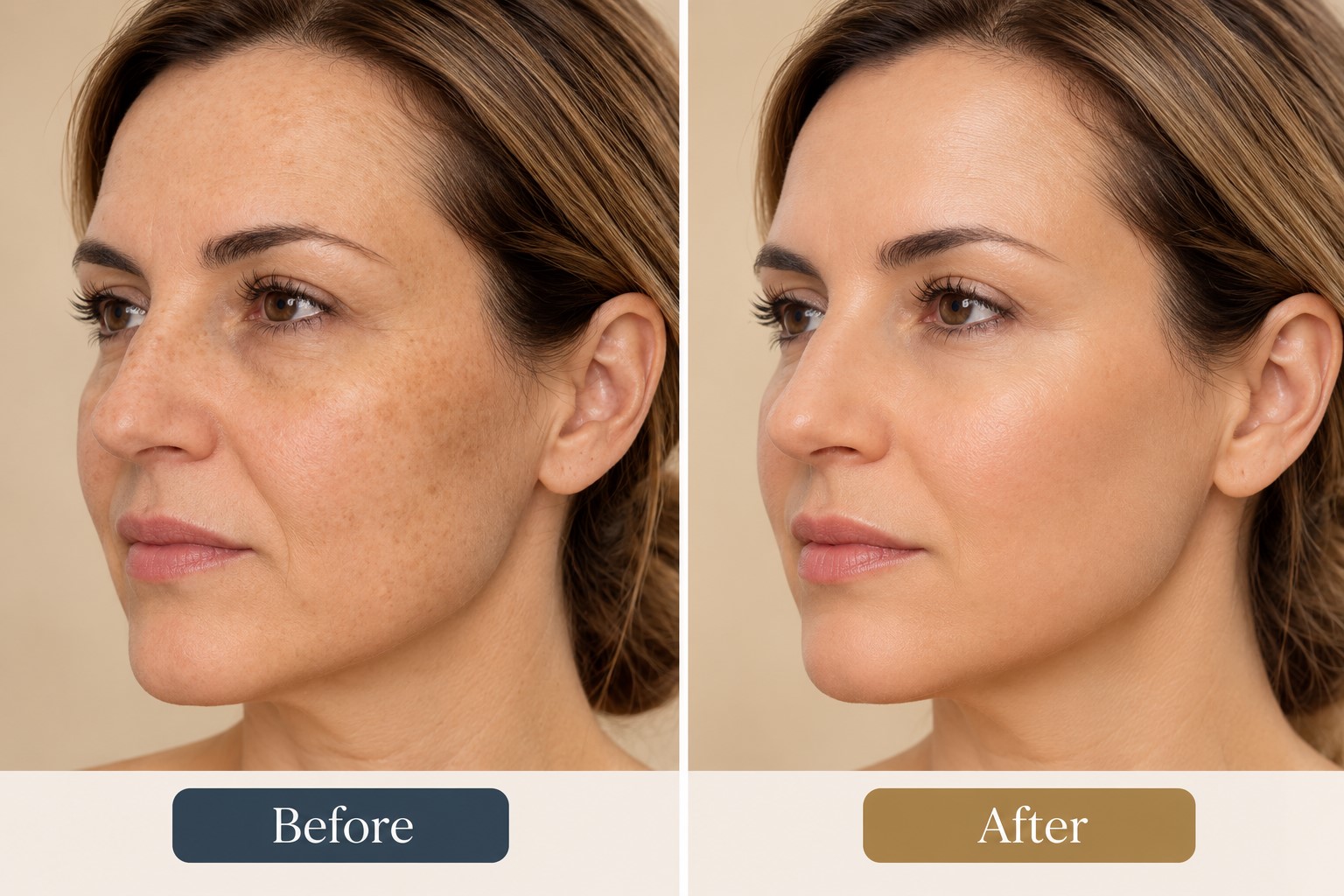
View an example of skin improvement following laser resurfacing. Individual results vary according to skin condition, treatment depth, laser technology, and the treatment plan.
Before-and-after images can help illustrate changes in skin texture, tone, and overall appearance. Results differ between patients and depend on individual skin characteristics, treatment settings, and healing.
Find answers to common questions about laser skin resurfacing, including treatment options, recovery, results, and potential side effects.
Laser skin resurfacing uses focused laser energy to improve skin texture and appearance. Depending on the treatment, it can remove selected outer skin layers or heat deeper tissue to support collagen production.
Laser resurfacing can help improve the appearance of fine lines, uneven skin texture, sun-related changes, pigmentation, and certain acne scars. The concerns treated depend on the laser technology and treatment depth selected.
Laser resurfacing may suit adults who want to address specific skin concerns and have realistic expectations. A consultation helps assess your skin, medical history, treatment goals, and suitability for the procedure.
Treatment options include ablative, non-ablative, and fractional resurfacing. Technologies may include CO₂, erbium, pulsed-dye, or Nd:YAG lasers, as well as selected light-based treatments such as IPL.
Ablative resurfacing removes controlled layers of the outer skin and usually requires more recovery time. Non-ablative treatment heats targeted tissue without removing the outer skin layer and generally involves less downtime.
The treatment begins with a skin assessment and treatment plan. After the skin is prepared, the selected laser delivers controlled energy to the treatment area. Anaesthesia, treatment settings, and aftercare depend on the laser and treatment depth.
Sensation varies according to the laser, treatment depth, and area treated. Your practitioner may use topical or local anaesthesia, and sedation may be appropriate for some more intensive treatments.
Recovery depends on the laser technology and treatment intensity. Gentler treatments may involve limited downtime, while more intensive ablative resurfacing can require several weeks for the skin to heal.
Treated skin may look red or swollen and can feel sensitive, warm, itchy, or irritated. Depending on the treatment, peeling or crusting may occur while the skin heals.
Some improvement may appear as the skin heals, but results develop gradually. Collagen remodeling can continue to refine skin texture and appearance over several months.
Results can last for years, but they do not stop the natural ageing process. Sun exposure, ageing, lifestyle, and your skin's condition can influence how long the improvement remains visible.
Darker skin does not automatically rule out laser resurfacing. However, some treatments carry a higher risk of pigmentation changes, so laser selection and practitioner experience require careful consideration.
Possible effects include redness, swelling, sensitivity, itching, peeling, pigmentation changes, infection, and milia. Cold sore reactivation can also occur, while scarring remains uncommon.
Preparation depends on your treatment plan and medical history. Tell your practitioner about medications, previous treatments, cold sores, skin conditions, and other relevant health factors before treatment.
Yes. Protecting treated skin from sunlight forms an important part of recovery. Follow your practitioner's instructions for sun protection and skincare while your skin heals.
Every treatment plan begins with understanding your skin, concerns, medical history, and desired outcome. Book a consultation to discuss the most appropriate approach for you.
Book Your Consultation →Contact our team to discuss your goals, receive your personalized treatment plan, and begin your journey to Istanbul with confidence.