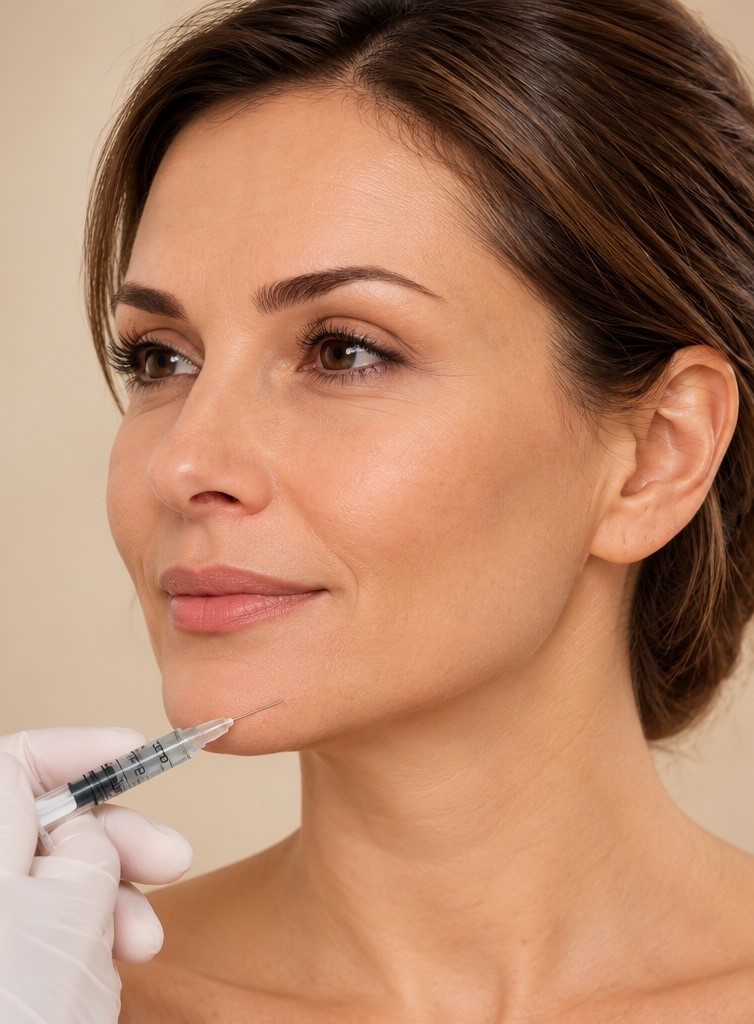
Hyaluronic Acid
Hyaluronic acid (HA) occurs naturally in the body and can add volume while supporting a hydrated, smoother-looking appearance. HA fillers commonly suit cheek augmentation and contour refinement.
Enhance cheek volume and facial definition with a personalised injectable treatment designed to complement your natural features and create balanced, refined contours.
Cheek filler is a non-surgical injectable treatment that adds volume to the cheeks and enhances cheekbone definition. A qualified practitioner places carefully selected dermal filler beneath the skin to improve facial contour and restore areas of lost volume.
Treatment can address naturally flatter cheeks, age-related volume loss, or a desire for more defined facial contours. Your practitioner can adjust the amount and placement of filler to suit your facial structure and aesthetic goals.
Thoughtful filler placement can create subtle definition and balanced volume while preserving your natural facial character.
Cheek fillers can restore lost volume or enhance naturally subtle cheek contours. A personalised treatment plan focuses on facial balance, proportion, and the level of definition you want to achieve.
Restore fullness in cheeks that have become less defined with natural ageing or changes in facial volume.
Add subtle projection around the cheekbones to create clearer facial definition and a more structured appearance.
Thoughtful filler placement can improve visual balance between the cheeks and surrounding facial features.
Restoring cheek volume may soften the appearance of certain lines and transitions across the midface.
Cheek fillers can add controlled volume for people who naturally have flatter or less prominent cheeks.
Your practitioner can tailor filler placement and volume to your anatomy, facial structure, and aesthetic goals.
The goal is not to change your identity. Careful treatment can enhance cheek definition while maintaining harmony with your existing facial features.
Cheek fillers may suit adults who want to restore facial volume, improve cheekbone definition, or create more balanced facial proportions without surgery.
You may have reduced cheek fullness from natural ageing or changes in facial volume and want to restore a fuller appearance.
You may want more visible cheekbone definition or a clearer transition between the cheeks and surrounding facial features.
You may want to improve the visual balance between your cheeks, midface, and other facial features.
You may prefer an injectable treatment rather than a surgical procedure to enhance cheek volume and definition.
You understand that fillers create enhancement rather than completely change your facial structure or appearance.
A qualified practitioner can review your medical history, skin condition, previous treatments, and goals before recommending cheek fillers.
Cheek fillers do not suit everyone. Your practitioner should assess your facial anatomy, treatment goals, medical history, allergies, skin condition, medications, and previous injectable treatments before recommending filler.
Different dermal fillers offer different characteristics, longevity, and ways to enhance cheek volume. Your practitioner can recommend the most appropriate option based on your anatomy and treatment goals.
Hyaluronic acid (HA) occurs naturally in the body and can add volume while supporting a hydrated, smoother-looking appearance. HA fillers commonly suit cheek augmentation and contour refinement.
Calcium hydroxylapatite (CaHA) can provide fullness and structure in areas that need stronger support. Practitioners may also use it to improve the appearance of deeper lines and contour changes.
Poly-L-lactic acid (PLLA) works differently from traditional volumising fillers. It encourages your body to produce collagen, so changes develop gradually rather than appearing all at once.
Polymethylmethacrylate (PMMA) contains microspheres that can provide longer-lasting structural support. Practitioners may use it for selected patients who need added firmness and volume.
Filler choice depends on factors such as facial anatomy, desired volume, treatment area, previous treatments, and the result you want to achieve. Your practitioner should assess these factors before recommending a product.
Both treatments can add volume to the cheeks, but they use different approaches. Understanding the differences can help you discuss the most suitable option for your facial goals.
Neither treatment suits every patient. Your surgeon or qualified practitioner can assess your facial anatomy, desired volume, previous treatments, and overall goals before recommending an appropriate approach.
Cheek filler treatment follows a personalised process that begins with facial assessment and ends with careful aftercare guidance. Each step helps create balanced and natural-looking enhancement.
Your practitioner examines your facial proportions, cheek volume, skin condition, previous treatments, and aesthetic goals. This assessment helps determine whether cheek fillers suit your needs and where treatment may provide the most balanced result.
The practitioner cleans the treatment area before the injections. Depending on the product and treatment plan, they may use a topical numbing product or another method to improve comfort.
Using a fine needle or appropriate injection technique, the practitioner places controlled amounts of filler in selected areas of the cheeks. Careful placement helps create the desired volume and definition.
The practitioner evaluates the treated areas during the session and adjusts the treatment when appropriate. The aim is to create cheek volume that complements your overall facial proportions.
Your practitioner may apply a cool pack to the treated areas and explain how to care for your skin after treatment. Mild swelling, tenderness, or bruising can occur during the early recovery period.
You may notice an initial change soon after treatment, while swelling gradually settles. Your practitioner can advise when to review the result and whether any further treatment would benefit your goals.
Treatment time varies with the areas treated, filler type, and individual plan. Your practitioner will explain the technique, expected recovery, and aftercare before treatment.
Cheek filler usually involves little downtime, but swelling and tenderness can affect the treated area during the early recovery period. Your cheeks gradually settle as the filler integrates with the surrounding tissue.
You may notice increased cheek volume soon after treatment. Mild swelling, tenderness, redness, or bruising can occur around the injection sites.
Swelling usually starts to improve during the first few days. Follow your practitioner's aftercare instructions and avoid unnecessary pressure on the treated area.
As swelling decreases, cheek volume and facial definition become easier to assess. Mild bruising or tenderness may continue for some patients.
Once the treated area settles, the cheeks can show a smoother and more defined appearance. The final effect depends on the filler used, treatment plan, and individual response.
Cheek fillers can enhance facial structure while maintaining the character of your natural features. The treatment aims to create proportionate cheek volume rather than an overly full appearance.
Recovery time and final results vary according to the filler used, treatment area, injection technique, skin characteristics, and individual healing response.
Cheek filler results can last for several months or longer, depending on the filler type, treatment area, amount used, and your individual response to the product.
Different dermal fillers have different compositions and durability. Your practitioner can recommend an option based on your desired level of volume, definition, and longevity.
The amount of filler and the areas treated can influence how long the visible effect remains. Precise placement also helps maintain balanced facial proportions.
Your body gradually breaks down and absorbs filler over time. Individual metabolism and tissue characteristics can affect how quickly the treatment changes.
Some patients choose maintenance treatments when the filler effect begins to fade. Your practitioner can assess your cheeks and recommend whether further treatment makes sense.
Cheek filler does not provide permanent volume. As your body gradually breaks down the product, the treated area slowly returns toward its previous appearance. Some filler types can provide longer-lasting effects than others.
No exact duration applies to every patient. The filler selected, treatment technique, facial anatomy, metabolism, and individual response all influence how long the results remain noticeable.
Cheek fillers can add targeted volume and enhance facial definition while keeping the treatment tailored to your natural features, proportions, and aesthetic goals.
Targeted filler placement can create more visible cheekbone definition and give the midface a refined, structured appearance.
Cheek fillers can restore volume that decreases with age or create additional fullness when naturally flatter cheeks affect your desired facial contour.
Carefully planned cheek volume can improve the relationship between the cheeks, midface, and surrounding facial features.
Cheek fillers offer a non-surgical option for patients who want to enhance facial volume and definition without facial surgery.
The treatment can be tailored to the amount of volume and definition you want, allowing your practitioner to plan the result around your facial structure.
Strategic volume can create smoother transitions across the midface and contribute to a more balanced, defined overall facial appearance.
The goal is not to create excessive volume. A personalised treatment plan focuses on proportion, facial harmony, and an appearance that remains recognisably yours.
Cheek fillers can provide effective facial enhancement, but injectable treatments also carry potential risks. Understanding common reactions and uncommon complications helps you make an informed decision.
Mild swelling, tenderness, or sensitivity can occur around the treated area after injection and usually improves as the tissue settles.
Temporary bruising or redness may appear near injection sites. These effects typically become less noticeable during the early recovery period.
Temporary lumps, firmness, or uneven contours can occur while the filler settles. Assessment and appropriate treatment can help address persistent concerns.
Infection can occur after an injectable treatment, although it remains uncommon when appropriate hygiene and clinical protocols guide the procedure.
Rarely, filler can enter or compress a blood vessel and affect blood flow. This serious complication requires prompt medical assessment and treatment.
Some patients can develop an allergic response or delayed inflammatory reaction. Your medical history and previous filler treatments should form part of the assessment.
Severe or increasing pain, significant skin colour changes, marked swelling, vision changes, or other unusual symptoms after filler treatment require prompt medical assessment.
A qualified medical professional should assess your facial anatomy, medical history, previous treatments, medications, and treatment goals before recommending cheek filler.
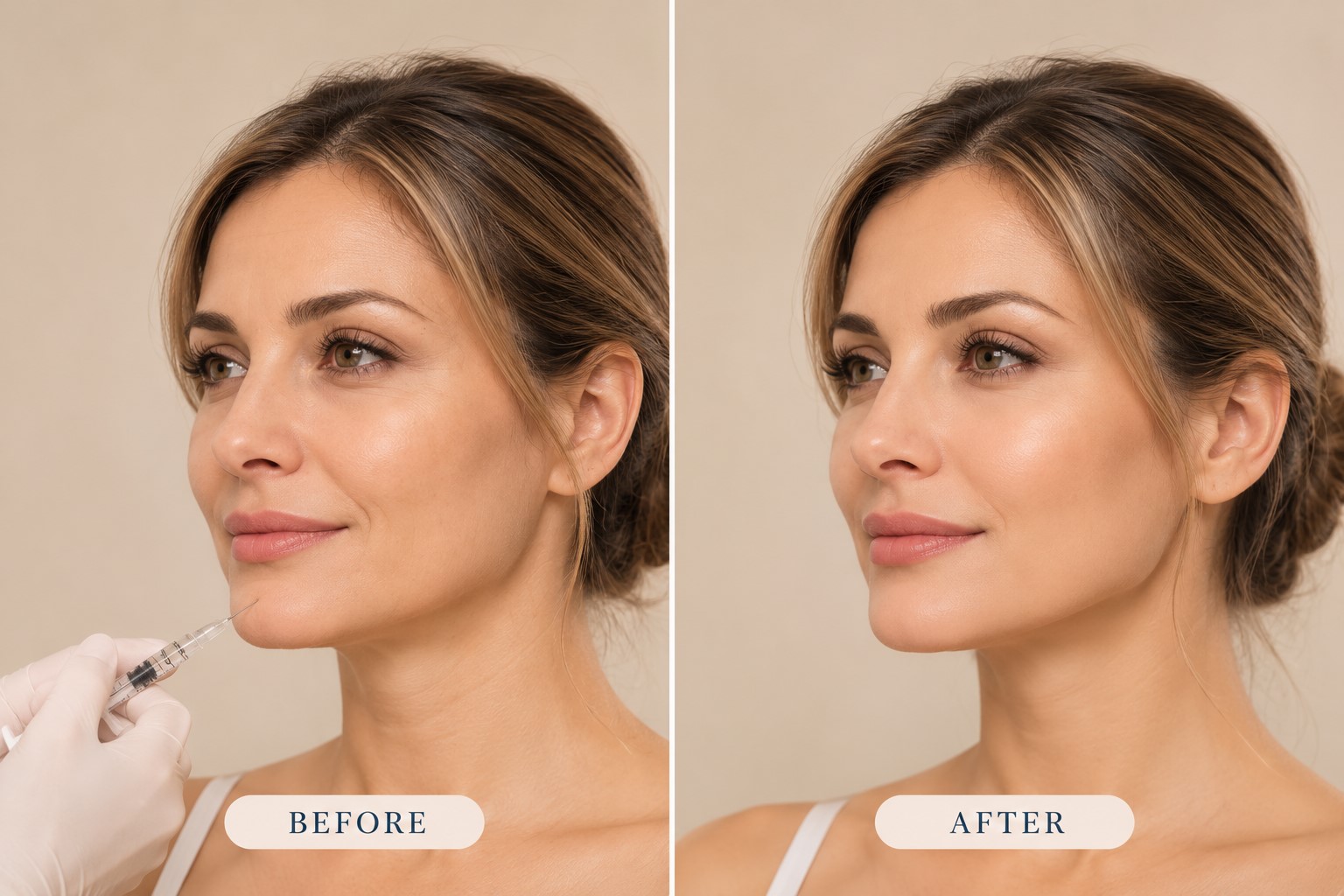
View an example of facial contour enhancement following cheek filler treatment. Individual results vary according to facial anatomy, filler selection, treatment technique, and healing.
Before-and-after images can help illustrate changes in cheek volume and facial definition. Results differ between patients and depend on individual anatomy, treatment planning, and response to the filler.
Find answers to common questions about cheek filler treatment, recovery, results, longevity, and potential risks.
Cheek fillers are injectable dermal fillers that add volume and enhance cheekbone definition. A practitioner places the filler in selected areas to improve facial contour and balance.
Cheek filler results can last for several months or longer. The duration depends on the filler type, treatment area, amount used, and your individual response to the product.
Most patients experience only mild discomfort during treatment. A topical numbing method or a filler containing a local anaesthetic may help improve comfort, depending on the treatment plan.
Treatment time varies according to the number of areas treated and the amount of filler required. Your practitioner can provide a more accurate estimate during your consultation.
You may notice increased cheek volume immediately after treatment. Swelling can temporarily affect the appearance, so the final contour becomes easier to assess as the treated area settles.
Swelling usually starts to improve during the first few days. The exact recovery period varies between patients and depends on the treatment area, filler, technique, and individual response.
Yes. A personalised treatment plan can add controlled volume while respecting your facial proportions. The goal should focus on balanced definition rather than excessive fullness.
Cheek fillers use an injectable dermal filler, while facial fat grafting uses fat collected from another area of your body. Each option has different considerations for treatment, recovery, adjustability, and longevity.
Common effects include temporary swelling, tenderness, redness, and bruising. Less common complications can include infection, lumps, unevenness, delayed reactions, and rare vascular complications.
Serious complications are uncommon, but filler can rarely affect a blood vessel and disrupt blood flow. Severe pain, significant skin colour changes, vision changes, or unusual swelling require prompt medical assessment.
Cheek fillers may suit adults who want to restore volume, improve cheekbone definition, or refine facial proportions without surgery. A medical assessment helps determine whether injectable treatment suits your anatomy and goals.
Yes. Cheek fillers can restore selected areas of volume that decrease with age. Treatment can also improve cheek definition and support more balanced midface proportions.
Many patients return to routine activities soon after treatment. Your practitioner will provide specific aftercare guidance based on the filler used, injection technique, and your individual circumstances.
Some cheek fillers, such as hyaluronic acid fillers, can be treated with an enzyme that breaks down the filler when clinically appropriate. Other filler types require different management approaches.
The cost depends on the filler selected, amount required, treatment areas, and individual treatment plan. Deneuvo can provide personalised pricing after assessing your needs during a consultation.
Every treatment plan starts with understanding your facial structure, goals, and individual needs.
Book Your Consultation →Contact our team to discuss your goals, receive your personalized treatment plan, and begin your journey to Istanbul with confidence.